
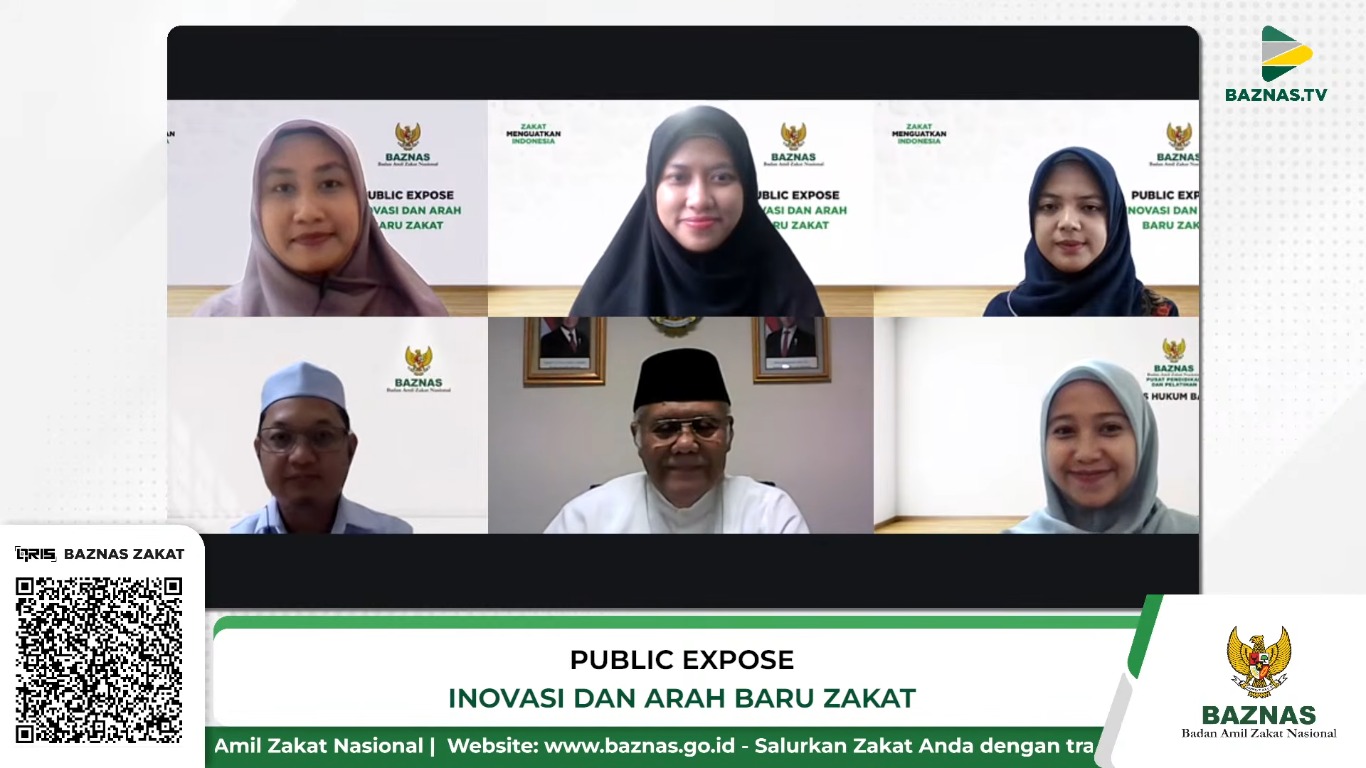
Jakarta, 26 February, 2026 - The Directorate of Research and Development of BAZNAS RI held a Public Expose event with the theme “Innovation and New Direction of Zakat” which was broadcast online via Zoom and YouTube BAZNAS TV.
The event featured the BAZNAS Commissioner for Planning, Research, and Development, Prof. (H.C.) Dr. Zainulbahar Noor, SE., M.EC., Director of Research and Development of BAZNAS RI Muhammad Hasbi Zaenal, Ph.D., as well as researchers from the Directorate of Research and Development of BAZNAS RI as speakers. The event was moderated by Rifdah Mufidah, a student at the Indonesia University of Education.
During the event, The National Board of Zakat (BAZNAS) RI, through the The Directorate of Research and Development of BAZNAS RI, presented various research results and strategic ideas related to strengthening zakat governance in Indonesia. Strengthening studies and research is an important aspect in supporting more strategic, transparent, and data-driven zakat management policies. This Public Expose served as a forum for disseminating knowledge to the public, academics, and zakat practitioners regarding developments in zakat studies, while also introducing various innovations that can encourage more effective and widespread optimization of zakat management for the welfare of mustahik.
In addition, the speakers also presented new directions for the development of zakat in Indonesia, including the utilization of innovation and strengthening synergies between institutions in order to optimize the potential of national zakat, starting from strengthening the management system, developing beneficiary empowerment programs, to utilizing data and strategic studies in supporting national zakat policies. These efforts are expected to increase public trust and expand the benefits of zakat for mustahik.
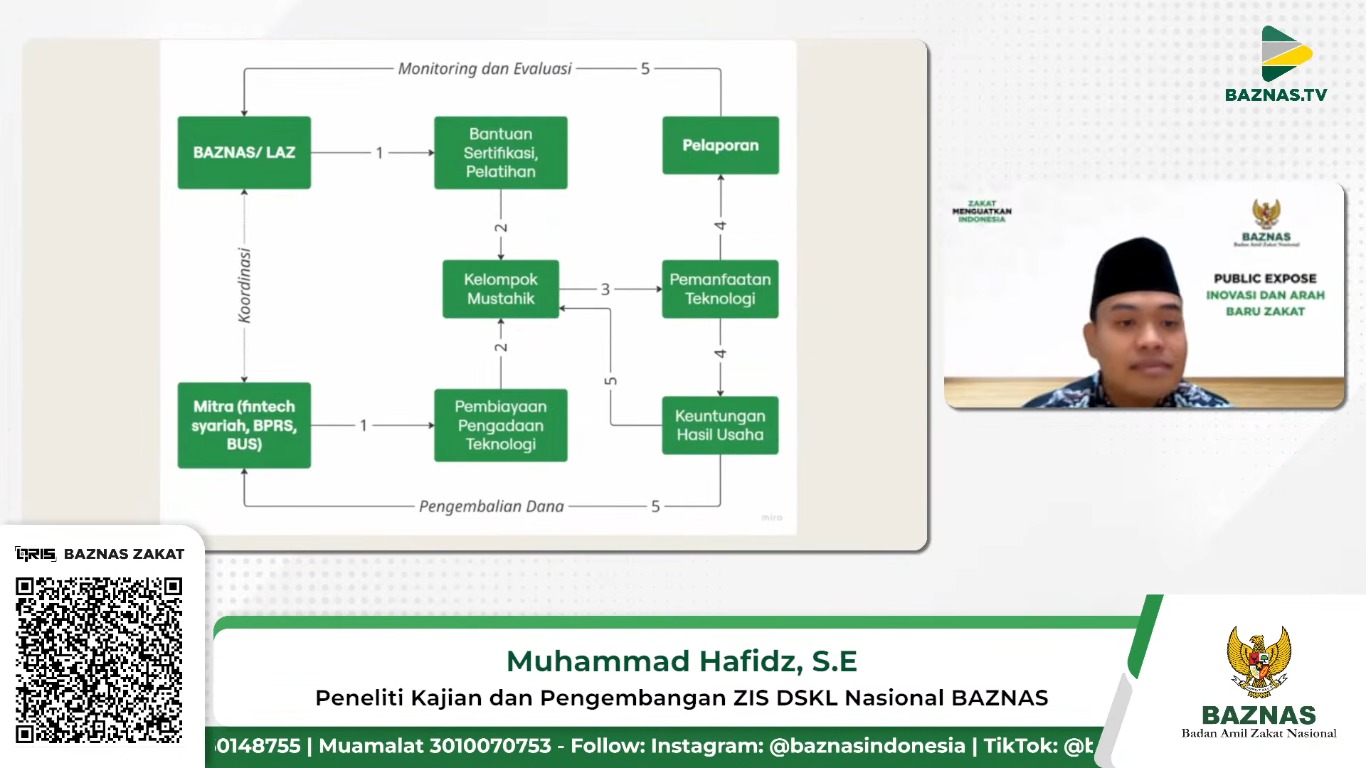
The first speaker, Muhammad Hafidz, S.E., explained innovations in the utilization of zakat based on applied technology. Zakat is not only distributed consumptively, but also developed productively through the support of applied technology in the agriculture, fisheries, and MSME sectors, which can drive the economic empowerment of mustahik. These innovations include the digitization of collection and distribution systems, the use of data for mapping needs, and the integration of technology in empowerment programs to be more targeted and measurable. These innovations can increase the productivity of mustahik, strengthen economic independence, and build a more effective and sustainable zakat utilization system.
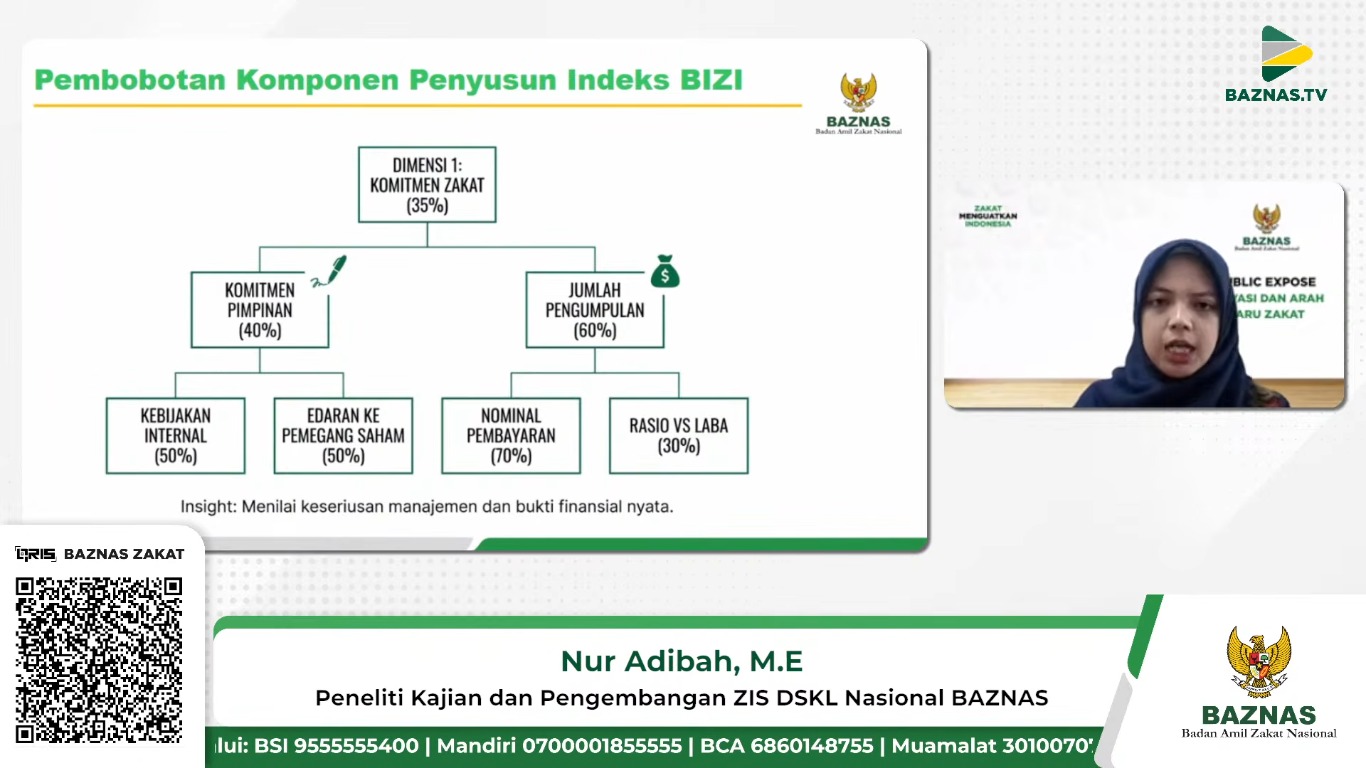
Furthermore, Nur Adibah, M.E. explained the Indonesia Zakat Index Exchange. Bursa Indonesia Zakat Index (BIZI) is used to measure the level of corporate compliance with corporate zakat and stock zakat obligations in accordance with the mandate of Law number 23 of 2011. This index covers state-owned and private companies, both issuers and non-issuers, with the aim of encouraging the integration of zakat values into modern governance and ESG principles in the Indonesian capital market. The potential for stock zakat continues to experience a positive growth trend, despite fluctuations, with the highest surge occurring in 2022. Amidst the dynamics of the modern economy, companies are not only profit-oriented but also bear ethical and social responsibilities through the optimization of zakat. With the potential of zakat from the corporate and capital market sectors continuing to increase, the presence of the Bursa Indonesia Zakat Index (BIZI) has become an important instrument for measuring corporate compliance, governance, and zakat contributions in a transparent and accountable manner.
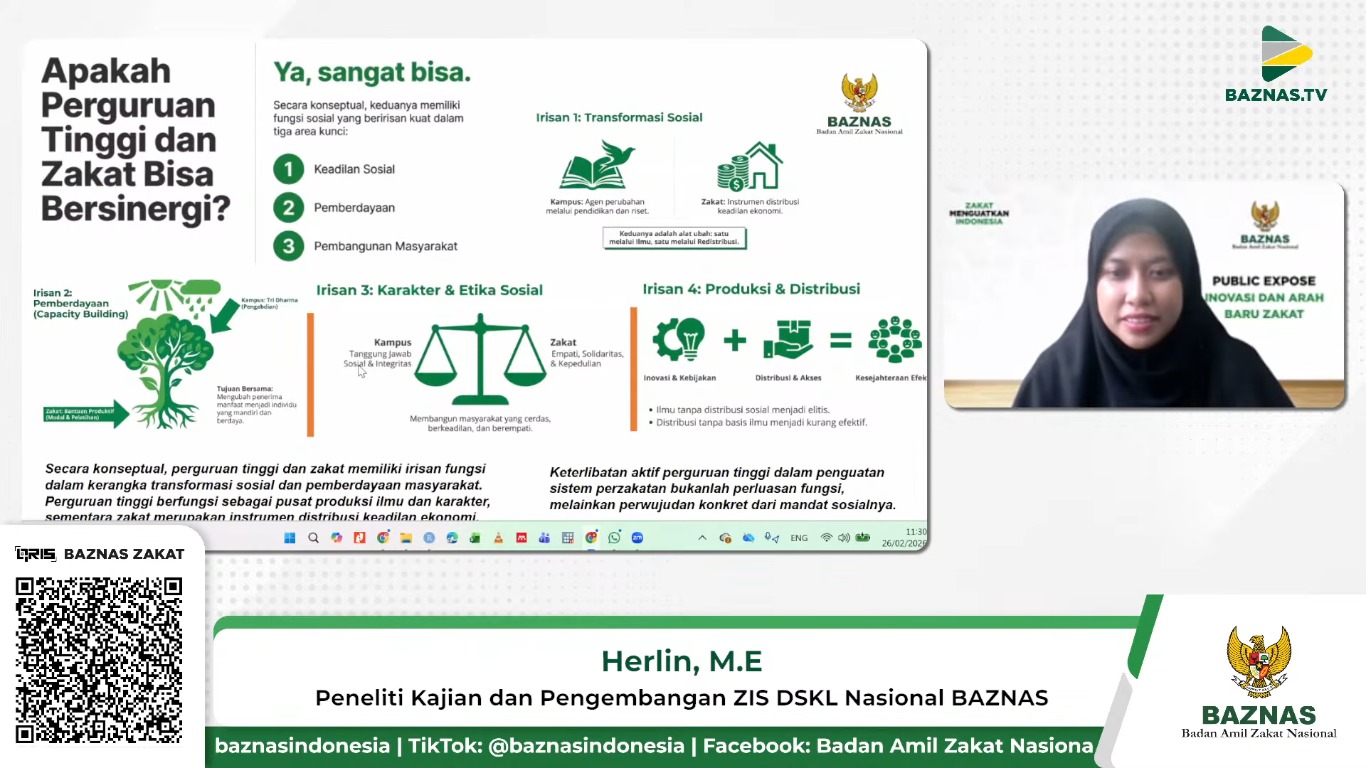
Meanwhile, Herlin, S.E., M.Si. spoke about the University Zakat Index. The University Zakat Index highlights the strategic role of universities in strengthening the zakat ecosystem. The University Zakat Index measures three main dimensions, namely the existence and performance of Higher Education Zakat Collection Units (UPZ), zakat advocacy and literacy through curricula and scientific publications, and strategic partnerships with zakat managers. This highlights zakat as a key Islamic financial instrument with great potential, including in the university environment, where universities can serve as a bridge between scientific development, zakat management practices, and public policy through the strengthening of modern and transparent zakat governance.
Through this Public Expose event, it was demonstrated that zakat has great potential as a professional Islamic social finance instrument with a real impact on poverty alleviation. BAZNAS hopes to provide an overview of the development of zakat management studies and innovations in Indonesia while encouraging collaboration among various parties in developing a more professional and sustainable zakat management system.