
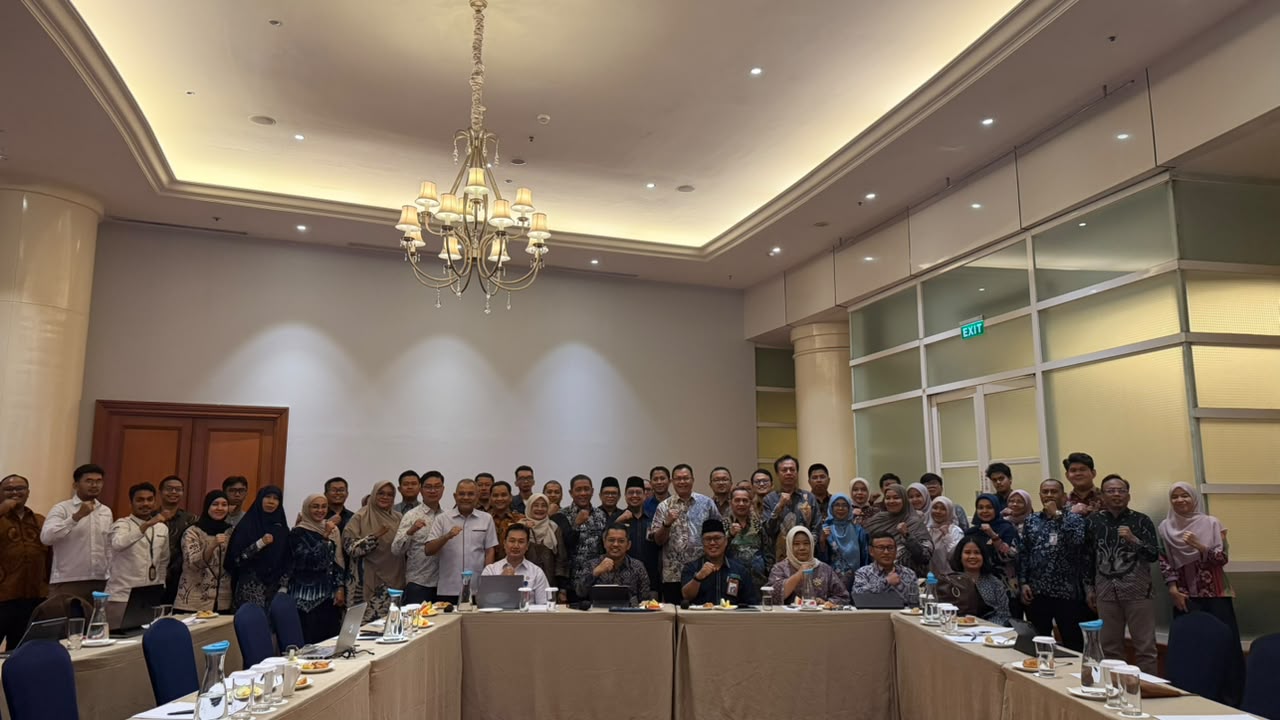
Jakarta, 16 September 2026 – The National Board of Zakat of the Republic of Indonesia (BAZNAS RI) participated in the Regional Islamic Economy Development Technical Guidance for Java and Kalimantan, held at The Ritz-Carlton Jakarta, Mega Kuningan. The program was organized to support the acceleration of Islamic economic development at the regional level and to strengthen the implementation of Regional Action Plans for Islamic Economy Development.
The two-day program, held on 16–17 September 2026, brought together regional governments and Regional Islamic Economy and Finance Committees (KDEKS) from 11 provinces across Java and Kalimantan. The program was initiated by the National Committee for Islamic Economy and Finance (KNEKS), the Ministry of National Development Planning/Bappenas, and the Ministry of Home Affairs, with facilitation from the Department of Islamic Economy and Finance of Bank Indonesia. It also formed part of Bank Indonesia’s Regional Sharia Economic Festival (FESyar) series.
Representing BAZNAS RI, Muhammad Hasbi Zaenal, Ph.D., Director of Research, Studies, and Development of National ZIS-DSKL, delivered a presentation on the National Zakat Index (Indeks Zakat Nasional/IZN) indicators. BAZNAS was invited alongside representatives from the Financial Services Authority (OJK), the Halal Product Assurance Organizing Agency (BPJPH), the National Research and Innovation Agency (BRIN), and the Center for Sharia Economics and Business (PEBS) of Universitas Indonesia.
Through the presentation, BAZNAS introduced the National Zakat Index as an instrument for measuring and monitoring the development of zakat management and its contribution within the regional Islamic economic ecosystem. The session provided an opportunity to strengthen the understanding of regional stakeholders regarding the role of zakat indicators in supporting evidence-based planning, monitoring, and evaluation of Islamic economic development.
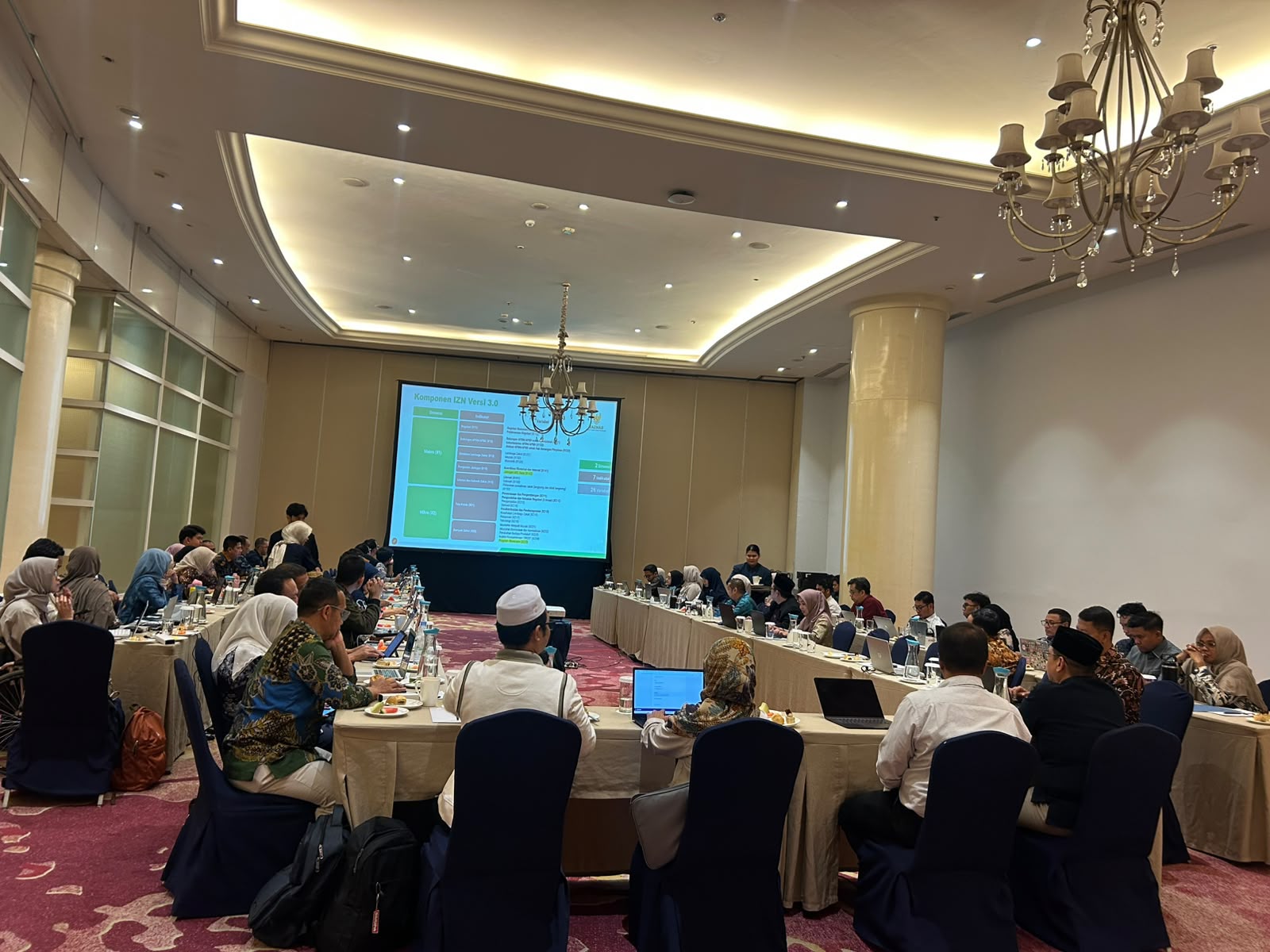
The presentation of the National Zakat Index was positioned alongside other indicators relevant to regional Islamic economic development, including the number of halal-certified products and the ratio of Islamic banking assets to Gross Regional Domestic Product (GRDP). This framework places zakat as one of the measurable components that can contribute to assessing the progress of Islamic economic development at the regional level.
BAZNAS emphasized the importance of connecting zakat development with regional planning processes. Through the National Zakat Index, regional stakeholders can obtain a more structured picture of zakat management performance and identify areas that require further strengthening. This approach can also support coordination between BAZNAS, regional governments, KDEKS, and other stakeholders in developing programs that respond to regional conditions and priorities.
The technical guidance itself focused on the principles, values, strategies, and achievement of outcome indicators for regional Islamic economic development. It also supported the follow-up of Regional Action Plans prepared by Regional Government Organizations (OPD), KDEKS, and relevant vertical institutions.
Through its participation in the forum, BAZNAS RI continues to strengthen the integration of zakat into the broader Islamic economic development agenda. The use of measurable indicators such as the National Zakat Index is expected to support stronger coordination, data-driven planning, and more effective monitoring of zakat’s contribution to inclusive and sustainable regional development.